Showing posts with label International Space Station. Show all posts

Friday, October 11, 2013

Suspension of Disbelief and the Matter of "Gravity"

Spoiler alert - This blog post contains spoilers about Alfonso Cuarón’s film Gravity.

Science fiction films by their nature invite us to suspend disbelief. They are vehicles of the imagination, often asking us to buy into improbable or impossible situations. But is there any way for us to assess when their flights into counterfactuality are justified and when they go too far?

Science writer, Dennis Overbye, stakes out a position in this debate in a recent article in the New York Times. In it he discusses, in the company of veteran astronaut Michael J. Massimino, the recently-released film Gravity. The writer and his companion really like the movie. They admire its realistic recreations and, in particular, its faithfulness to the action-reaction demands of Newtonian physics. It is with some reservation, though, that Overbye points out that,
"Unfortunately, with all this verisimilitude, there is a hole in the plot: a gaping orbital impossibility big enough to drive the Starship Enterprise through."
According to Overbye, this hole gapes because the film asks us to suspend disbelief and accept as a premise that the Space Shuttle on a Hubble Space Telescope servicing mission and the International Space Station (ISS) would find themselves in the same orbit, indeed within spitting distance of one another. (It should be noted that, thanks to the aforementioned Newton’s laws, spitting distance in the vacuum of space can be considerable.) Overbye may be right as a matter of history, but I believe that he is wrong as a matter of film criticism. And, contrary to his expectation, I don’t think that “space fans will groan” as result of Gravity taking this liberty.

When a film like Gravity asks us to buy into something that we know is unlikely or out-and-out untrue, it does so as part of a bargain. In exchange for our credulity we are promised a compelling story, with the understanding that the impossible or improbable things that we are asked to accept are essential to the tale that is to be told. Whether these whoppers are large or small or whether they numerous or few, they cannot be arbitrary; they have to be critical to the development of place or plot or character in some important way.

Like any work of fiction, Gravity enjoys moderate license to play fast and loose with historical facts. We don’t complain, for example, that its story is impossible because the space shuttle program has come to an end and all surviving instances of that spacecraft have taken up final posts in museums around the country. Nor are we much bothered by the fact that, even if the space shuttle remained operational, it would not be dispatched on another Hubble repair mission. Getting the funds from Congress and a “go” from NASA for the last one was a was a near impossibility.

NASA astronaut Nicole Stott,
poses in a Russian Soyuz spacecraft.
In exchange for these lapses in historical authenticity we get a plausible space adventure, one which begins with a breathtaking, yet oddly familiar, establishing shot: our protagonists, rookie Mission Specialist Dr. Ryan Stone (Sandra Bullock) and veteran astronaut Matt Kowalski (George Clooney) space-walking in the vicinity of an orbiting space shuttle and the attached Hubble Space Telescope, floating against the backdrop of a beautiful, blue, cloud-dappled Earth below.

Significantly, this opening scene tells us that director Alfonso Cuarón intends to anchor Gravity in a faithful recreation of contemporary space technology; this movie is not going to be some sort of fluffy sci-fi contrivance filled with make-believe spaceships decorated with bogus control panels. Instead, what Cuarón has in mind is a painstakingly realized period piece, the period being the second decade of the twenty-first century and the setting, the human outposts of low Earth orbit and their surrounds.

Robinson Crusoe illustration,
N.C. Wyeth
The tale that Cuarón has to tell here is, in part, an age-old one of survival against all odds, the triumph, by grit and cunning, of a hapless and isolated wayfarer over the unforgiving forces of nature. Traditionally, stories like this unfold at sea. (Take for example Ang Lee’s Life of Pi in 2012 and Robert Redford’s soon-to-be-released All is Lost.) For centuries our planet’s vast oceans have provided storytellers with the ready possibility of total isolation. Menace in these circumstances is usually delivered in the form of raging storms from above or man-eating predators from below. And, of course, there is the inevitability of death, if food or water should become exhausted.

In Cuarón’s reimagining of this genre, the deep blue sea is replaced by a transparent, airless region of space two hundred miles or so above the surface of the Earth. Vacuum and extreme temperature are the the ever-present predators here, kept at bay by the thin white line of spacesuit and the thin gold one of visor. An expanding cascade of high-velocity space-debris destroys all possibility of communication with Mission Control, drawing the curtain of isolation tightly about our astronauts. To make matters worse, this very same storm of orbiting shrapnel rains down like clockwork every ninety minutes, growing in intensity and destructive force with each circling of the planet. Minutes count. There will be no ticking off the passage of days by anyone with marks on the side of a life raft. Eventually Ryan’s isolation is made total as her partner Kowalski drifts off into the void at the end of the first act of the film. In this environment, hunger and thirst aren't killers; death comes quickly when oxygen runs out.

International Space Station,
May 29, 2011
This is where Overbye's objection about the location of the International Space Station so close to the Hubble comes into the picture. Having stranded his hero, Cuarón is obligated to provide her with a way home. He must do so while remaining faithful to his artistic vision for the film, which means staying true to a recreation of contemporary space technology. So, in defiance of historical fact, the director places the Space Station nearby the orbiting Hubble telescope. It will provide Ryan with a temporary place of refuge and the possibility of using the attached Soyuz spacecraft as a lifeboat to ferry her to Earth and to safety. It will also provide the director with the opportunity to demonstrate his virtuosity at bringing this beautiful and intricately constructed space habitat to life on the screen.

Allowing the Space Station and the Hubble to share the stage in Gravity is a concession which permits the director to relocate the traditional shipwrecked survivor tale to low Earth orbit. The story must supply some way for Ryan to save herself. Using the Space Station seems a reasonable choice, given the artistic restrictions that Cuarón has imposed on himself. In addition, we are rewarded as a result of this choice by a display of CG verisimilitude that is all the more compelling because it is rooted in detail that can be found only in existing engineering marvels such as the International Space Station.

This bargain offered by Gravity was more than enough to meet my criteria for suspension of disbelief. I willingly accepted its premises and, thanks to Alfonso Cuarón, got a plausible and compelling tale of triumph against all odds in return.

Wednesday, February 16, 2011

One-Way Mission to Mars - Kumbaya Fail

In this fourth part of my critique of a recently proposed one-way mission to Mars I address whether a kick-start colonization of Mars can be justified on political grounds. My third post disputes whether such a colony is either a safe or a cost-effective way to pursue important scientific goals. You can find the introduction to the series here.

In their November 2010 paper in the Journal of Cosmology, along with other reasons for pursuing an expedited one-way mission to Mars, Dirk Schulze-Makuch and Paul Davies assert that
establishing a permanent multicultural and multinational human presence on another world would have a major beneficial political and social implications for Earth, and serve as a strong unifying and uplifting theme for all humanity.
It is hard to see how they derive confidence in such a claim.

Independence Day
movie poster
Space and space missions are a standard of science fiction when it comes to creating story lines that unite humanity in spite of centuries-old divisions. This unification is often accomplished most efficiently when planet Earth is in imminent danger of being destroyed by an asteroid impact or being conquered by an alien armada.

Nowhere is this better exemplified than at the climax of the 1996 movie Independence Day, where the American president, played by Bill Pullman, delivers a speech that rallies his troops for a last-ditch airborne counterattack on an invading force, with identical calls to arms being enacted simultaneously around the globe by people of all races and all creeds and all colors, apparently.

Earthrise, December 1968
I came of age during the the Apollo program and, as a 14-year old, watched enraptured as Neil Armstrong placed his booted foot on lunar soil. Old enough to appreciate what this meant as a national achievement and as an engineering tour de force, I was also old enough to be aware of the promise that it offered to be a unifying force for "all mankind", one beautifully anticipated in the earthrise Christmas Eve image taken by the astronauts of Apollo 8 less than a year before.

Although that day in July 1969 was celebrated the world over, the moon landings themselves failed to have any long-term impact as far as bringing people closer together. The Cold War and its proxy conflicts raged on, indifferent to these wondrous technological achievements.

International Space Station from
the Space Shuttle Atlantis
Another example of an unmet promise of political uplift offered by a costly space mission, this one closer to home, is that embodied by the International Space Station (ISS). Touted as a permanent multicultural and multinational human presence in low-earth orbit, it, too, was to provide Earth-bound humans with a transcendent unifying theme.

Yet, resplendent, orbiting above the planet at an altitude of 350 km (220 miles), it goes largely unnoticed by the world below. This is not to say that the Space Station has not called into being a remarkable intergovernmental collaboration on an unprecedented scale, but to note that, although an engineering triumph, it has resulted in few if any discernible "major beneficial political and social implications" of the type advertised by the one-way Mars mission proposal. If the tepid public reaction to the ISS is any indication, then it's not clear that such expectations should weigh in favorably in our evaluation of Schulze-Makuch and Davies's scheme to establish a human settlement on Mars post haste.

As with other motivations for the proposed expedited colonization of Mars - that it serve as a science outpost and as a lifeboat for humanity - rational analysis demands that we consider how alternative approaches compare as far as promoting a more positive political and social climate here on Earth. In other words, given that a one-way mission would cost hundreds of billions of dollars or more, how might similar - or even significantly smaller sums - be spent to foster feelings of union and brotherhood.

Jimmy Carter tries to comfort a 6-year-old
at Savelugu (Ghana) Hospital as a
Carter Center technical assistant dresses
her painful Guinea worm wound.
Although little can be done directly to bridge the divides of malignant ideologies, religious fanaticism and misguided nationalism that separate us, it has been long understood the alleviation of much of human suffering is within our grasp and that the result of doing so would yield unquestionable major political and social benefits. An example of an immediately attainable objective would be the eradication of endemic diseases such as guinea worm. A more ambitious challenge would be to commit to insure that every person on the planet is provided with adequate daily nutrition as well as access to a reliable source of drinking water.

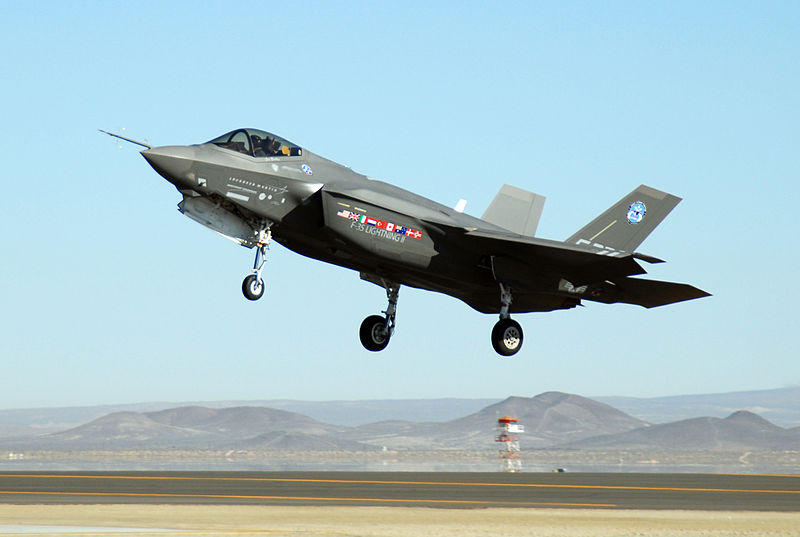
U.S. F-35 Joint Strike Fighter
with a $110 million per unit cost
Without a doubt, goals such as these are politically daunting, but they are technically and economically feasible, particularly if countries like the United States expand their vision of international security - and with it the application of their annual one trillion dollars of "defense" spending - to encompass important non-military threats to world order and human well-being. Indeed, mobilizing the nations of the planet to mitigate the damage anticipated as a result of disruptive climate change this century, provides a ready-made unifying goal for humanity, one which we are morally obligated to address and, to the extent that we prevail in our efforts, one which could both unite and ennoble us.

Suffice it to say, we don't need to go shopping around for extraterrestrial projects, such as an ill-considered one-way mission to Mars, in order to concoct challenges to inspire and unify us, when working in broad international coalitions against terrestrial scourges, such as disease, hunger, global warming, not only would generate a much greater sense of unity and common purpose, but also would offer desperately needed material advances to billions of people here on Earth.

Part 5: One-Way Mission to Mars - Ethics Fail

Creative Commons License
One-Way Mission to Mars - Kumbaya Fail by Marc Merlin is licensed under a Creative Commons Attribution-NonCommercial-NoDerivs 3.0 Unported License.
Based on a work at thoughtsarise.blogspot.com.